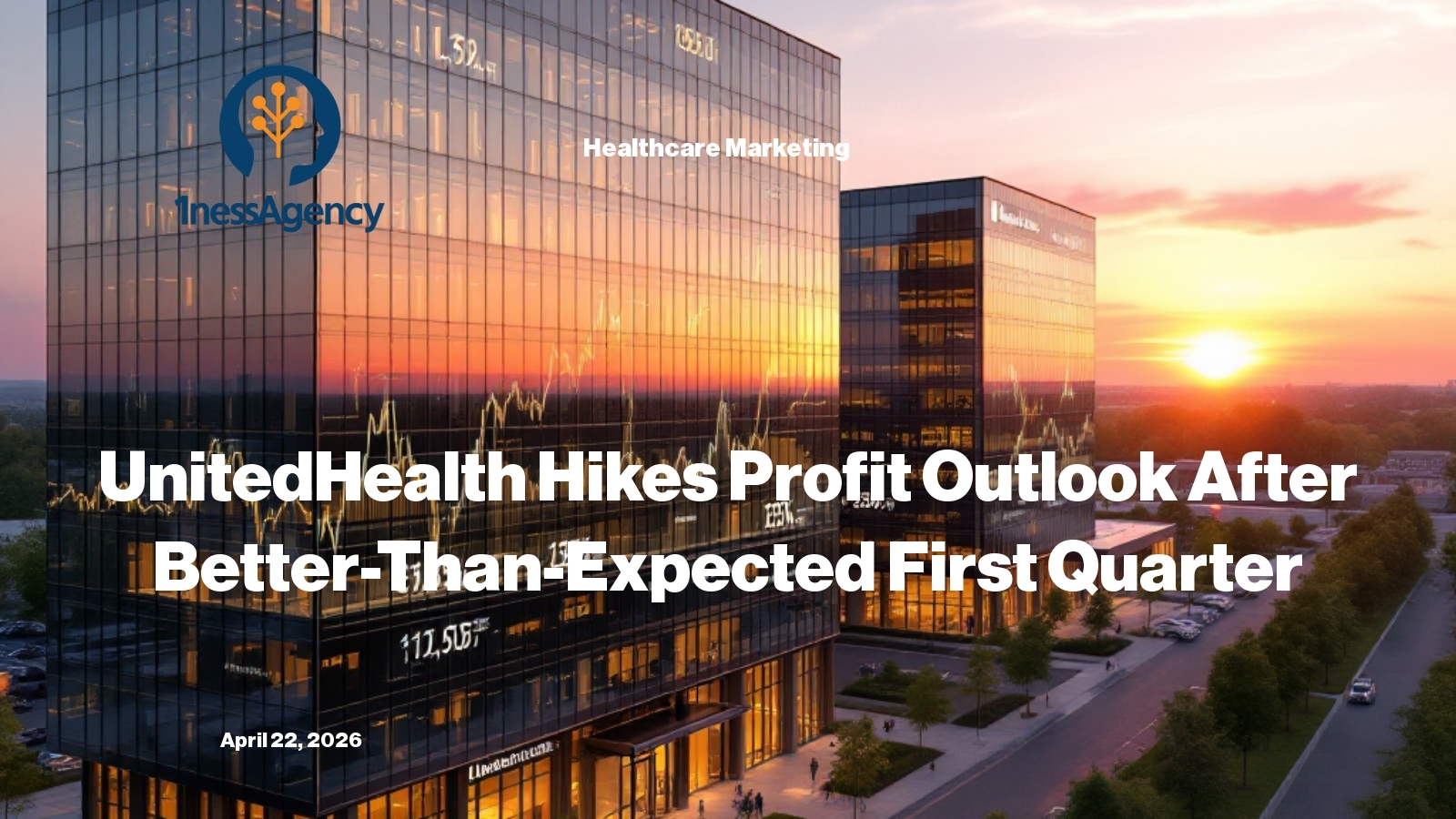
UnitedHealth Group raised its 2026 profit outlook following first-quarter earnings that exceeded Wall Street expectations, extending the nation's largest health insurer's financial outperformance at a moment when providers face margin pressure from real estate costs, regulatory compliance, and reimbursement constraints [1]. For healthcare marketers at hospitals, nursing homes, and physician groups, the divergence between payer profits and provider economics demands a strategic reset: patient acquisition now competes directly with capital allocation decisions that determine whether facilities can afford competitive staffing, modern equipment, or the digital marketing infrastructure needed to fill beds.
The financial gap grows more pronounced as real estate investment trusts extract rent from healthcare facilities even as those buildings struggle with operational deficits. Court records from a 2026 nursing home case show one Sacramento facility paid its REIT landlord more than $1 million annually while running in the red, a structure that diverts dollars from patient care and staff retention into investor returns [2]. When payers post better-than-expected profits while providers send money out the door as rent rather than reinvesting in quality measures that drive patient preference, the implication for marketers is stark: you cannot market your way out of a broken unit economics problem.
Federal regulators moved in April 2026 to modernize drug development protocols, including new guidance on genome editing safety standards and achieving year-one goals in reducing animal testing, changes projected to cut research and development costs and eventually lower drug prices [3][4]. The FDA noted that more than 90 percent of drugs clearing animal studies fail to receive approval due to safety or efficacy issues in human trials, underscoring the agency's push toward human-relevant testing platforms [4].
The collision of payer profitability, provider margin compression, and evolving regulatory frameworks creates a new competitive landscape. Healthcare marketers at provider organizations now operate in an environment where capital access determines marketing capability, where reimbursement rates set by profitable insurers constrain the budgets available for patient acquisition, and where regulatory modernization may eventually ease cost pressures but offers no immediate relief. The organizations that win patient volume in this environment will be those that align marketing strategy with financial structure, viewing patient acquisition not as a discretionary expense but as a capital allocation decision that competes with rent, compliance costs, and staffing.
The Payer-Provider Profit Divide Reshapes Marketing Budgets
UnitedHealth's profit increase arrives as providers confront a financial structure that siphons revenue away from operations. The real estate investment trust model, which has acquired thousands of healthcare buildings over the past decade, creates lease obligations that rank ahead of marketing, staffing, and quality investments in the cash flow waterfall [2]. CareTrust REIT, the landlord in the Sacramento nursing home case, required through its lease that the facility maintain at least 80 percent occupancy and monitored the home's spending on nurses and food, according to court records filed in 2026 [2]. The REIT tracked government safety inspections and Medicare quality ratings not to improve care but to protect rent payments [2].
For healthcare marketers, this financial architecture means budget requests now compete against fixed costs that cannot be negotiated. A hospital paying market-rate rent to a REIT landlord has less flexibility to fund digital advertising, physician liaison programs, or patient experience improvements than a competitor that owns its real estate. The marketing implication: organizations with better capital structures can outspend rivals on patient acquisition, creating a self-reinforcing advantage where financial strength drives volume, which drives margin, which funds more marketing.
Payer profitability compounds the challenge. When the nation's largest insurer raises profit guidance while providers struggle with operational deficits, the dynamic reveals who controls pricing power in healthcare transactions. Insurers negotiate reimbursement rates; providers accept them or exit networks. Marketing cannot fix a reimbursement structure that makes certain service lines unprofitable, but marketing leaders must understand which services generate positive contribution margins under current payer contracts and allocate acquisition dollars accordingly.
Regulatory Modernization Creates Long-Term Cost Relief, But Not in Q2
The FDA's April 2026 announcements on genome editing guidance and animal testing reduction represent a multi-year effort to lower drug development costs, which the agency explicitly connected to reducing drug prices for consumers [3][4]. FDA Commissioner Marty Makary stated the animal testing roadmap would "reduce research and development costs, which will lower drug prices for everyday Americans" [4]. The genome editing guidance provides sponsors with standardized safety assessment methods using next-generation sequencing, supporting accelerated development timelines for individualized therapies targeting ultra-rare diseases [3].
These regulatory shifts matter for healthcare marketers in two ways. First, lower drug costs eventually reduce the total cost of care, which affects employer willingness to steer employees toward high-performance networks and influences Medicare Advantage plan competitiveness. Providers that market on total episode cost rather than fee-for-service volume gain advantage as pharmaceutical costs decline. Second, gene therapy development creates demand for specialized treatment sites and infrastructure. Marketing leaders at academic medical centers and specialty hospitals should track which rare disease therapies move toward commercialization and position their organizations as administration sites before competitors establish referral relationships.
The FDA noted its genome editing guidance applies to both ex vivo products, where cells are edited outside the patient's body, and in vivo products, where editing occurs directly in tissues [3]. This technical distinction creates different facility requirements and marketing opportunities. Ex vivo therapies require collection sites, processing labs, and infusion centers, infrastructure that community hospitals can potentially offer through partnerships. In vivo gene therapies may concentrate at academic centers with specialized monitoring capabilities, creating a two-tier market where community providers compete on access and convenience while academic centers compete on expertise and complexity.
Real Estate Structures Now Determine Marketing Capacity
The Sacramento nursing home case illustrates how lease terms constrain operational decisions. CareTrust REIT's requirement that City Creek Post-Acute maintain 80 percent occupancy creates a floor beneath which the facility cannot drop without breaching its lease [2]. For the facility's marketers, this means volume targets are legally mandated, not strategically chosen. The pressure to fill beds can lead to accepting patients whose acuity exceeds the facility's capability or whose payer mix drains margin, decisions that erode quality, which then makes future marketing harder as online reviews and government ratings decline.
Internal CareTrust records showed the REIT tracked facility spending on nurses and food, giving the landlord visibility into operational decisions that directly affect patient satisfaction and clinical outcomes [2]. A nursing home that cuts food quality to make rent payments will see those cuts reflected in patient and family complaints, which become Google reviews, which suppress inquiry volume, which makes the 80 percent occupancy target harder to hit. Marketing cannot overcome operational deficits created by financial structures that prioritize rent over care delivery.
Provider organizations evaluating real estate decisions should model the marketing implications of different ownership structures. A sale-leaseback transaction that generates immediate cash but creates a 20-year lease obligation will constrain marketing budgets for two decades. The short-term capital infusion may fund a new service line or facility renovation, but the long-term rent payment reduces the margin available for patient acquisition. Marketing leaders should participate in real estate decisions, quantifying how different capital structures affect the dollars available for demand generation.
Follow the Money: Where Profit Goes, Marketing Follows
UnitedHealth's profit increase reflects the company's integrated model, which combines insurance operations with physician practices, pharmacies, and data analytics [1]. This vertical integration allows the company to capture value at multiple points in the care delivery chain, underwriting the insurance policy, managing the pharmacy benefit, employing the physicians who deliver care, and analyzing the data that flows through the system. For independent providers marketing to patients covered by vertically integrated payers, the challenge is that the insurer already controls referral patterns through employed physician networks and benefits designs that steer patients toward affiliated facilities.
Marketing strategy for independent providers must account for this structural disadvantage. Digital advertising to patients covered by UnitedHealthcare may generate inquiry volume, but if the insurer's benefits design imposes higher cost-sharing for out-of-network care, many of those inquiries will not convert to appointments. Marketing dollars should flow toward patients covered by payers where the provider is in-network and where the benefit design does not create financial barriers to access. Audience targeting must incorporate insurance data, not just demographic and psychographic signals.
The real estate investment trust examination revealed that these landlords have acquired thousands of healthcare buildings over the past decade, creating a new layer of capital extraction between patient revenue and operational investment [2]. For every dollar a healthcare facility pays in rent to a REIT, that dollar is unavailable for staffing, equipment, quality improvement, or marketing. The cumulative effect shows in government inspection findings and Medicare quality ratings, which the REITs monitor not to improve care but to protect their rent streams [2]. Marketing cannot fix quality problems created by underinvestment, and underinvestment is often a function of capital structure.
The 1ness Take
Healthcare marketing in 2026 requires financial literacy that most CMOs were not hired to possess. UnitedHealth's profit performance and the real estate investment trust model both demonstrate that capital structure determines competitive position more powerfully than any marketing campaign. Our recommendation: healthcare marketing leaders must insert themselves into capital allocation discussions and real estate decisions with the same rigor they bring to media planning.
Start by modeling how different financial scenarios affect marketing capacity. If your organization is considering a sale-leaseback transaction, calculate not just the immediate cash proceeds but the annual rent obligation and how that payment will constrain marketing budgets for the lease term. If you are evaluating service line expansion, model the reimbursement rates from your top five payers and determine which services generate contribution margin adequate to fund patient acquisition. If you operate a skilled nursing facility or assisted living community with a REIT landlord, audit whether your lease contains occupancy requirements or operational restrictions that limit strategic flexibility.
Second, shift marketing mix toward channels and messages that work within your financial constraints. If you cannot outspend competitors on paid media because your rent obligation consumes margin, invest in physician relationships, referral network development, and reputation management. A five-star Google rating costs less than a television campaign and may convert better for high-consideration healthcare services. If your reimbursement rates from a dominant payer make certain service lines unprofitable, stop marketing those services to patients covered by that insurer, redirect spend toward services and payers where unit economics work.
Third, advocate for transparency in how financial decisions affect marketing capacity. When finance presents a real estate transaction or payer contract negotiation, marketing should model the downstream impact on patient acquisition costs and volume targets. A 15 percent reduction in reimbursement rates may require a 20 percent increase in marketing efficiency to maintain the same volume at acceptable contribution margin. If that efficiency gain is unrealistic, the organization needs to know before signing the contract.
Finally, recognize that regulatory modernization creates long-term opportunities but no short-term relief. The FDA's push to reduce drug development costs and accelerate gene therapy approvals will eventually create new service lines and referral opportunities, but not in this fiscal year. Marketing leaders should track which therapies are moving through the pipeline and begin positioning their organizations as treatment sites, but do not count on new modalities to solve 2026 budget challenges.
The Takeaway
UnitedHealth's profit increase and the real estate investment trust examination both point to the same conclusion: capital structure determines competitive position in healthcare, and marketing success requires alignment with financial reality. Healthcare marketing leaders should take three specific actions:
- Audit how capital structure affects marketing capacity. Calculate annual rent obligations, debt service, and other fixed costs that constrain the margin available for patient acquisition. Identify whether your organization's financial structure creates competitive advantage or disadvantage relative to peers.
- Reallocate marketing spend based on unit economics by payer and service line. Model reimbursement rates, contribution margins, and patient acquisition costs for your top services and payers. Stop marketing unprofitable service-payer combinations and redirect spend toward areas where economics support growth.
- Participate in financial decisions with marketing impact. Attend real estate discussions, payer contract negotiations, and capital allocation meetings. Quantify how different financial scenarios affect marketing budgets and volume targets. Make marketing capacity a variable in financial modeling, not an afterthought.
The organizations that win patient volume in 2026 will be those that recognize marketing as a capital allocation decision constrained by financial structure. Payer profitability and provider margin compression are not temporary conditions to be outlasted: they are the new competitive landscape. Marketing strategy must adapt or fail.
References
- Healthcare Dive. "UnitedHealth hikes profit outlook after better-than-expected first quarter." 2026 healthcaredive.com
- Rau, Jordan. "Real Estate Investors Profit From Long-Term Care While Residents Languish." KFF Health News, April 21, 2026 kffhealthnews.org
- U.S. Food and Drug Administration. "FDA Issues Draft Guidance on Genome Editing Safety Standards to Advance Gene Therapy Development." Press release, April 14, 2026 fda.gov
- U.S. Food and Drug Administration. "FDA Achieves Year 1 Goals in Reducing Animal Testing in Drug Development." Press release, April 20, 2026 fda.gov
This report is for informational purposes only and does not constitute investment advice or an offer to buy or sell any security. Content is based on publicly available sources believed reliable but not guaranteed. Opinions and forward-looking statements are subject to change; past performance is not indicative of future results. 1ness Strategies and its affiliates may hold positions in securities discussed herein. Readers should conduct independent due diligence and consult qualified advisors before making investment decisions.
© 2026 1ness Strategies. All rights reserved.