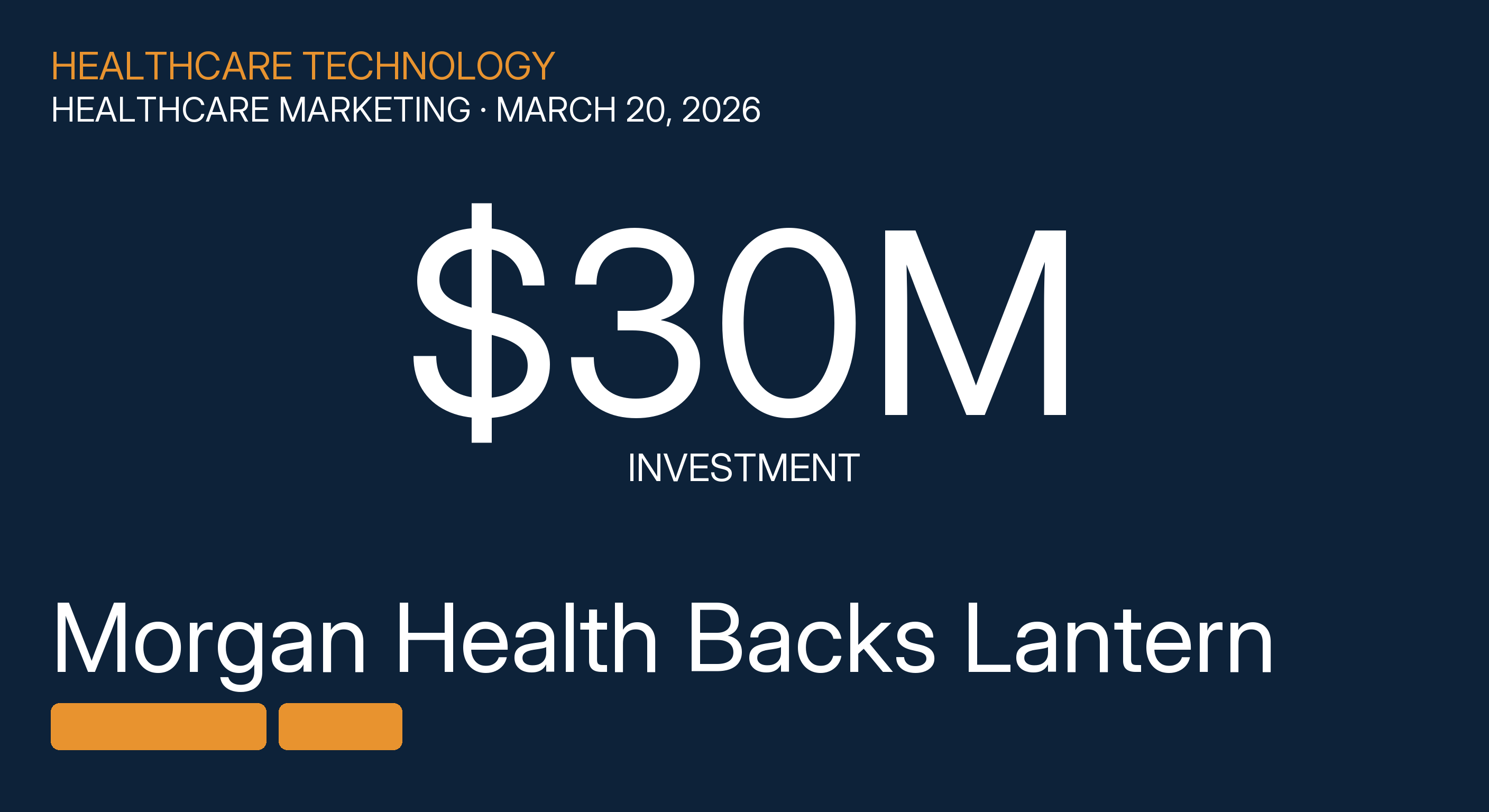
When one of the world's largest financial institutions invests $30 million in healthcare technology infrastructure, it's not just a business development story: it's a signal about where patient acquisition and engagement strategies are heading. JPMorgan Chase's Morgan Health unit backing Lantern reveals a critical truth for healthcare marketers: the future of patient acquisition isn't in broader reach, it's in solving the friction points that prevent patients from actually accessing care. If your marketing strategy stops at appointment requests instead of addressing the entire patient access journey, you're losing conversions at the point that matters most.
The Access-to-Care Crisis Is a Marketing Problem
Healthcare marketing has historically focused on top-of-funnel metrics, website visits, form fills, call volume. But the reality is that between 15-30% of patients who schedule appointments never show up, and an estimated 40% of patients who intend to seek care abandon the process due to complexity, confusion about coverage, or simple friction in the scheduling process. These aren't clinical failures; they're experience design failures.
Morgan Health's investment thesis centers on solving operational inefficiencies that plague healthcare delivery. For marketers, this translates to a fundamental shift in how you should measure campaign success. Cost per lead is meaningless if half those leads evaporate before their first visit. Cost per completed appointment (and ultimately, cost per patient retained through their first 90 days) are the metrics that matter.
Healthcare organizations spending six figures on Google Ads and brand campaigns while tolerating antiquated phone systems, week-long callback times, and opaque pricing are essentially pouring water into a leaky bucket. The investment in Lantern and similar patient access platforms signals that sophisticated healthcare investors recognize the patient experience infrastructure as the conversion optimization tool that actually drives ROI.
What Strategic Investors See That Healthcare Marketers Miss
JPMorgan Chase isn't entering healthcare as a philanthropic endeavor. Morgan Health manages healthcare benefits for over 300,000 JPMorgan Chase employees, giving them direct visibility into what drives utilization, satisfaction, and cost-effectiveness. Their investment decisions reflect what works in practice, not theory.
The strategic implication for healthcare marketers: your patient acquisition funnel must extend through scheduling, pre-visit preparation, and the first appointment experience. This means marketing leaders need to collaborate directly with operations on:
Patient access technology audits, When was the last time you called your own scheduling line as a mystery shopper? Average hold times above 3 minutes correlate with 12-18% abandonment rates. Your marketing spend is directly subsidizing your operational inefficiency. Real-time appointment availability, Patients who can see open slots and book online convert at 3-4x the rate of those who must call. If your digital front door still routes to "call us for availability," you're losing to competitors who've solved this problem. Price transparency integration, With the federal price transparency mandate in effect since January 2021, patients expect cost estimates before committing to care. Marketing content that addresses cost concerns upfront increases qualified lead volume by reducing uncertainty-based drop-off.Morgan Health's investment approach suggests they're betting on technology that reduces administrative burden while improving patient experience, a combination that directly impacts marketing efficiency. For every dollar you spend acquiring a patient, you should be spending 30-40 cents ensuring they can actually access care without friction.
The Employer-Sponsored Healthcare Marketing Channel
JPMorgan Chase's involvement through Morgan Health also highlights an underutilized marketing channel for healthcare organizations: direct employer partnerships. More than 160 million Americans receive health coverage through employer-sponsored plans, yet most healthcare marketing strategies focus exclusively on direct-to-consumer channels.
Healthcare systems that develop strategic relationships with large local employers gain access to defined patient populations with known coverage, predictable needs, and built-in distribution channels for health content. This isn't about outdated corporate wellness programs: it's about positioning your organization as the preferred provider for a captive audience.
Tactics to activate this channel:
- Centers of excellence partnerships, Negotiate preferred provider arrangements for high-value service lines (orthopedics, maternity, oncology) where employers are motivated by quality and cost outcomes
- Embedded navigation services, Offer care coordination services that help employer populations navigate to appropriate care settings, positioning your organization as a partner in cost management
- Outcome reporting, Provide employers with aggregated (HIPAA-compliant) outcome data that demonstrates value, creating renewal momentum and referral opportunities
The employer channel requires longer sales cycles but delivers higher lifetime value patients with lower acquisition costs than broad-based consumer marketing.
Compliance Considerations: When Technology Meets Patient Data
Any discussion of patient access technology and digital scheduling tools requires addressing HIPAA compliance and data security. As healthcare organizations adopt platforms that streamline scheduling, price estimation, and care navigation, marketing leaders must ensure:
- Business Associate Agreements (BAAs) are in place with all technology vendors that touch protected health information (PHI)
- Marketing attribution tracking respects HIPAA limitations on using PHI for marketing purposes without authorization
- Third-party tracking pixels (Google Analytics, Meta Pixel) are properly configured to avoid inadvertent PHI disclosure, a growing area of OCR enforcement and class-action litigation
The FTC's Health Breach Notification Rule has been aggressively enforced since 2023, with particular focus on health apps and patient portals that share data with advertising platforms. If your patient access technology connects to your marketing stack, ensure your legal and compliance teams have audited the data flow.
The Takeaway
Morgan Health's $30 million investment in patient access infrastructure should prompt healthcare marketing leaders to audit where their patient acquisition funnel is actually breaking. The strategic next steps:
1. Calculate your scheduling conversion rate, Track what percentage of marketing-generated inquiries result in completed first appointments. If you don't know this number, you're marketing blind.
2. Invest in access before awareness, Before your next brand campaign, ensure patients who respond can actually access care efficiently. Mystery shop your own scheduling process and fix the friction points.
3. Expand success metrics beyond lead volume, Shift marketing dashboards to include appointment completion rates, no-show rates, and 90-day patient retention for marketing-attributed patients. Hold your agency and internal team accountable for outcomes, not outputs.
Large institutional investors are betting that patient access infrastructure delivers better returns than traditional healthcare marketing tactics. That should tell you where to focus your next budget cycle.
References
- Becker's Hospital Review. "JPMorganChase's Morgan Health backs Lantern with $30M investment." Healthcare Information Technology. Accessed from beckershospitalreview.com.
- Centers for Medicare & Medicaid Services. "Price Transparency Requirements for Hospitals." Federal Register, January 1, 2021.
- U.S. Department of Health and Human Services, Office for Civil Rights. "HIPAA for Professionals." HHS.gov.
- Federal Trade Commission. "Health Breach Notification Rule." FTC.gov, 16 CFR Part 318.