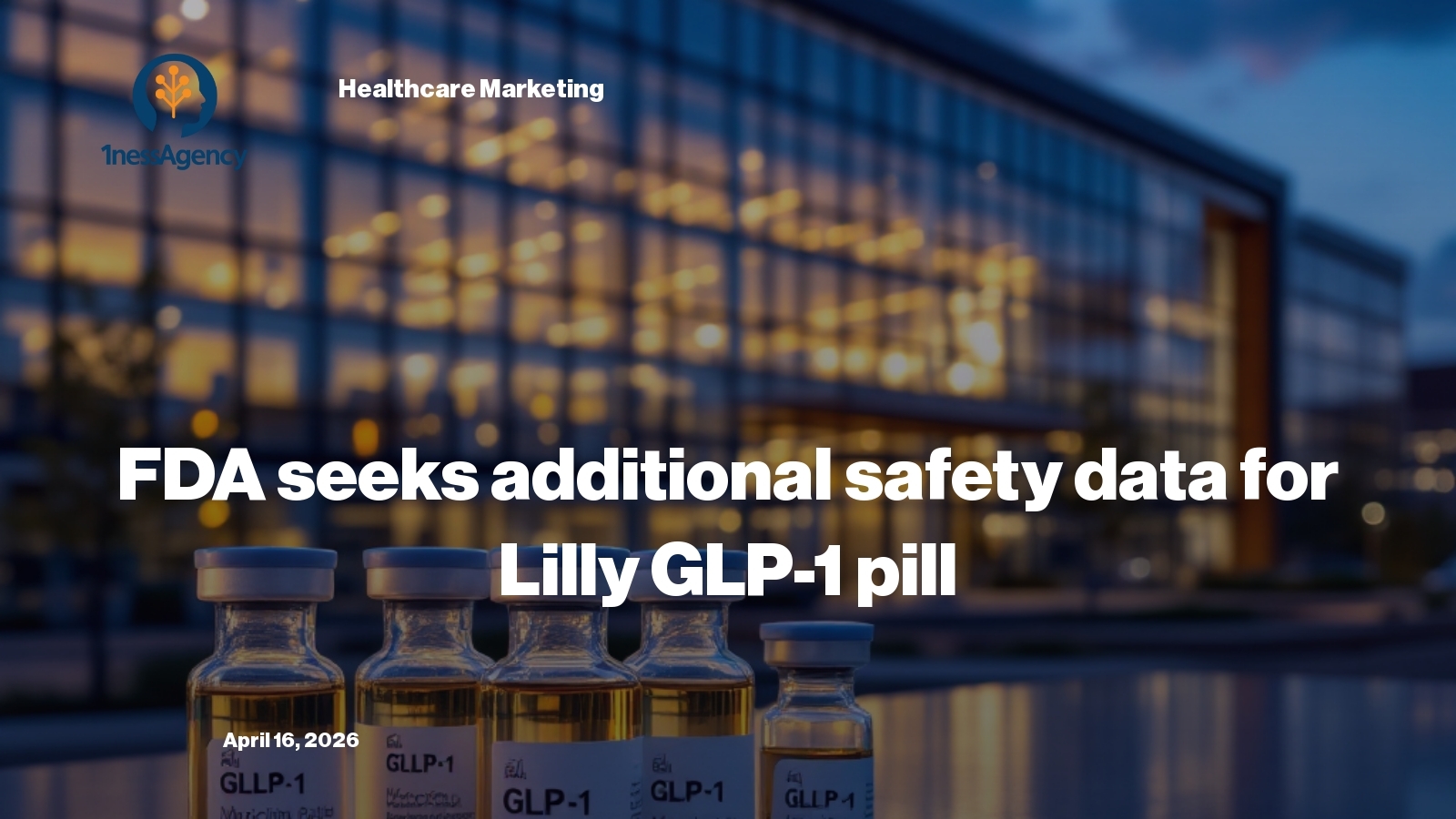
The FDA has requested additional safety data from Eli Lilly for its oral GLP-1 medication, extending the approval timeline for what would be the first pill form of the blockbuster diabetes and weight loss drug class. For healthcare marketers who have spent 18 months watching GLP-1 demand outstrip supply, this regulatory pause creates an immediate strategic question: Do you continue building patient acquisition infrastructure for oral GLP-1s, or redirect resources toward the injectable products that remain the only FDA-cleared options?
The timing matters because healthcare systems and specialty pharmacies have invested heavily in GLP-1 treatment programs based on the assumption that oral formulations would arrive in 2026, solving two critical barriers: injection anxiety among potential patients and workflow complexity in primary care settings. Those care models now face an extended window where patient education, staff training, and digital marketing campaigns must continue promoting injectable-only options while managing expectations about pill alternatives.
Industry analysts tracking the GLP-1 category note that FDA requests for additional safety data typically extend approval timelines by 6 to 12 months, though the agency provides no guaranteed timeframe. This uncertainty forces marketing leaders to plan for two scenarios simultaneously: a market that remains injection-dependent through 2027, and one where oral options could still arrive late in 2026.
The stakes extend beyond diabetes and endocrinology practices. Primary care networks, telehealth platforms, and employer health programs have all structured weight management services around the premise that oral GLP-1s would democratize access by removing the injection barrier. Without pill formulations, these programs must either accept lower conversion rates among injection-averse patients or invest more heavily in overcoming needle hesitancy through patient education.
The Patient Acquisition Calculus Just Changed
Healthcare systems marketing weight management programs face an immediate decision about messaging strategy. Over the past six months, many organizations began testing market messages that referenced "pill options coming soon" to generate interest among patients who had previously declined GLP-1 treatment due to injection concerns. That forward-looking language now creates risk.
The regulatory delay affects three patient segments differently. For the estimated 15% of patients who categorically refuse injectable medications, oral GLP-1s represent the difference between treatment and non-treatment. Marketing to this segment now requires either pivoting to injection education or pausing acquisition efforts entirely until pill formulations receive approval. For the 40-50% of patients who prefer pills but will accept injections, the delay changes the value proposition but not necessarily the treatment decision. This middle segment represents the immediate opportunity, but only if marketing campaigns proactively address the oral-vs-injectable question rather than allowing patients to self-disqualify based on outdated assumptions about availability.
The third segment, patients who have no preference between pills and injections, remains unaffected by the regulatory timeline, but represents a smaller portion of the addressable market than most marketers assume. Patient surveys conducted in diabetes and weight management categories consistently show that administration route affects treatment initiation rates, with oral medications showing 30-40% higher acceptance rates in screening-to-start conversion metrics.
Dollar figures tell the story most clearly. Healthcare organizations that built GLP-1 centers of excellence in 2025 and early 2026 invested between $500,000 and $2 million in program infrastructure, including pharmacy partnerships, care coordination staff, and patient monitoring technology. Those investments penciled out based on volume projections that assumed oral formulations would expand the addressable market by 20-30% starting mid-2026. With that expansion now delayed, patient acquisition costs rise while projected revenue timelines extend.
Telehealth Platforms Face Headwinds
Direct-to-consumer telehealth companies built entire business models around the convenience proposition: online consultation, home delivery, no office visits required. Injectable GLP-1s already challenged that model by requiring pharmacies to ship refrigerated medications and patients to manage injection technique without in-person training. Oral formulations promised to eliminate both friction points.
The regulatory delay hits these platforms particularly hard because their marketing spend scales with customer lifetime value projections. If oral GLP-1s could reduce patient dropout rates from 35% to 20% by eliminating injection fatigue, the math supported higher customer acquisition costs. Without pills, telehealth platforms must either accept lower ROI on paid advertising or find alternative ways to reduce the injection barrier through virtual education and support.
Several telehealth companies reported GLP-1 revenue growth rates exceeding 200% year-over-year in 2025, with investor presentations projecting continued acceleration as oral options launched. Those growth trajectories now face compression unless platforms can improve conversion rates for injectable products through better onboarding, injection training, and adherence support, all of which increase cost-per-acquisition.
The competitive landscape also shifts. Traditional healthcare systems with existing primary care relationships held potential disadvantage against telehealth platforms in a pill-based market, where convenience and price became the primary differentiators. Injectable medications restore the importance of in-person clinical support, potentially narrowing the telehealth advantage.
Marketing Message Compliance Gets More Complex
The FDA delay creates immediate compliance risk for healthcare organizations whose marketing materials reference oral GLP-1 options. Any language suggesting pills are "available soon" or "coming this year" now constitutes potentially misleading advertising, particularly if the organization cannot substantiate the timeline claim.
Marketing teams must audit all patient-facing content (websites, social media, email campaigns, direct mail, and provider education materials) to remove or revise references to oral formulations. The legal risk extends beyond FTC truth-in-advertising standards to state medical board regulations governing how healthcare providers communicate about treatment options. Promotional materials that create patient expectations for therapies that remain investigational or unapproved can trigger regulatory scrutiny.
The safer approach: frame oral GLP-1s as future possibilities under regulatory review rather than imminent options. This language shift requires retraining front-desk staff, call center representatives, and clinicians who field patient questions about treatment formats. Every patient touchpoint where oral medications were mentioned now needs updated talking points.
HIPAA considerations also apply to remarketing campaigns. Healthcare organizations that collected contact information from prospective patients specifically interested in oral GLP-1s must carefully manage how they re-engage those leads. Shifting those prospects from "waiting for pills" to "consider injections now" campaigns requires clear opt-in consent if the communication purpose has materially changed.
The 1ness Take
The FDA's request for additional data on Lilly's oral GLP-1 creates a 12-to-18-month window where healthcare marketers can either wait for regulatory clarity or double down on improving the injectable patient experience. We recommend the latter, because the organizations that solve injection anxiety and adherence challenges now will maintain competitive advantage even after oral options reach market.
Three tactical priorities deserve immediate attention. First, rebuild your patient education funnel to address injection concerns proactively rather than treating them as objections to overcome. This means video content showing real patients self-injecting, peer testimonials from patients who overcame needle anxiety, and comparison data on side effect profiles between different GLP-1 injection devices. The goal: reduce injection fear from a disqualifying barrier to a manageable concern.
Second, implement structured injection training as part of your patient onboarding workflow. The healthcare organizations seeing the highest GLP-1 adherence rates, and therefore the best patient outcomes and word-of-mouth marketing, invest in dedicated diabetes educators or nurses who conduct virtual or in-person injection training during the first prescription fill. This 15-30 minute touchpoint reduces early discontinuation by 25-35% based on patterns we observe in retention data.
Third, segment your acquisition campaigns by injection readiness rather than treating all prospective patients identically. Patients who have successfully used other injectable medications (insulin, fertility treatments, biologics for autoimmune conditions) convert at 3-4x the rate of injection-naive patients. Target your highest-cost advertising channels toward the high-propensity segment while using lower-cost education and nurture campaigns for prospects who need more time to become comfortable with injections.
The broader strategic implication: oral GLP-1s will eventually reach market, but the timeline uncertainty reveals which healthcare organizations have durable competitive advantages versus those relying on a specific product format to drive growth. The systems that build strong clinical reputations, superior patient experience, and effective outcomes measurement for injectable GLP-1s today will capture the oral market tomorrow. Those waiting for pills to solve their conversion problems will fall behind on both curves.
The Takeaway
Immediate actions for healthcare marketing leaders:- Audit all marketing content within 30 days to remove or revise references to oral GLP-1 availability. Replace forward-looking statements about pill options with factual language about products currently under FDA review.
- Invest in injection training infrastructure now rather than waiting for oral formulations. Organizations that reduce injection anxiety through better patient education will see 20-30% improvement in start rates and similar gains in 6-month adherence.
- Segment your patient acquisition strategy by prior injection experience. Use your highest-ROI channels to target the 30-40% of prospective patients who have successfully used other injectable medications, while building nurture campaigns for the injection-hesitant majority.
- Model your growth projections on injectable-only scenarios through 2027. The oral GLP-1 market will arrive eventually, but healthcare organizations that need pills to hit volume targets face 12-18 months of underperformance.
The regulatory delay isn't a reason to pause GLP-1 program development: it's a signal to focus on the fundamentals of patient experience and clinical outcomes that drive sustainable growth regardless of medication format.
References
- Becker's Hospital Review. "FDA seeks additional safety data for Lilly GLP-1 pill." 2026 beckershospitalreview.com